
My Trip to the Moton Museum
By: Anne Ford
Learning happens everywhere, and for one READ RVA student, a recent field trip offered an opportunity to connect what she has learned in her 1:1 tutoring sessions with a meaningful experience in her community.
Student Anne Ford (a pen name) and her 1:1 tutor visited the Moton Museum, a historic site and museum dedicated to the struggle for educational equality. After their visit, Anne wrote about her experience and what she learned along the way.
Below, Anne shares her reflections from the field trip in her own words:
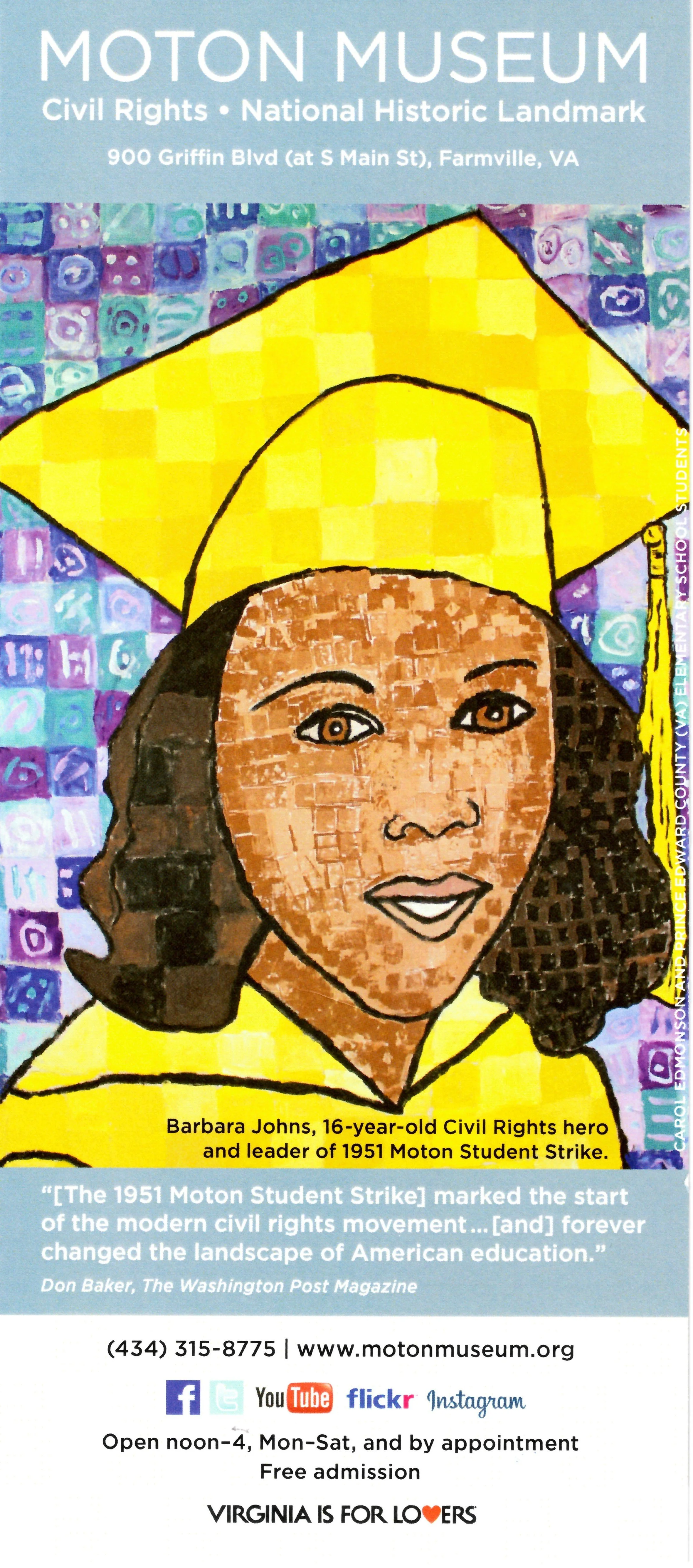
My tutor and I were reading about Barbara Ross Johns who played a big part of the student protest in Farmville in 1951. We decided to take a trip to visit the Moton Museum which was once the school for the Black kids in the mid-20th century. During my trip I learned that the cause of the walkout was the really extreme disparity in educational conditions. Moton School where Black students attended was overcrowded and in poor condition, where schools in Farmville were far better than the Black school. The Black students were underfunded, had fewer resources, less experienced teachers, and often had overcrowded classrooms compared to White students. Because of the poor conditions, the students at Moton protested by walking out of their school, led by Barbara Johns. They were not going back until they had better conditions. The student protest at the Moton School in 1951 was a landmark event.
The School Board punished the students and demanded they return to school. The students asked Oliver Hill and Spottswood Robinson who were Richmond lawyers to take their case because of the overcrowded classes. The school was supposed to hold 180 students, but in 1951, there were 450 students which wasn't very safe for the students. The case was added with other cases to become Brown vs Board of Education.
Farmville, Virginia closed public schools and opened an all-White school. This was called Massive Resistance. Because of this, Black students had no school to go to. Parents said, “for years our community was without any public schools, and because of this, they were denied education. For years, we have suffered discrimination. We want to justice for our kids. Our schools suffered when the schools were closed. Some of us had to move away to get our kids’ education, and some kids never finished school.”
Learn More
Interested in learning more about the Moton Museum and its history? Visit the Moton Museum website to explore its exhibits, programs, and resources!